
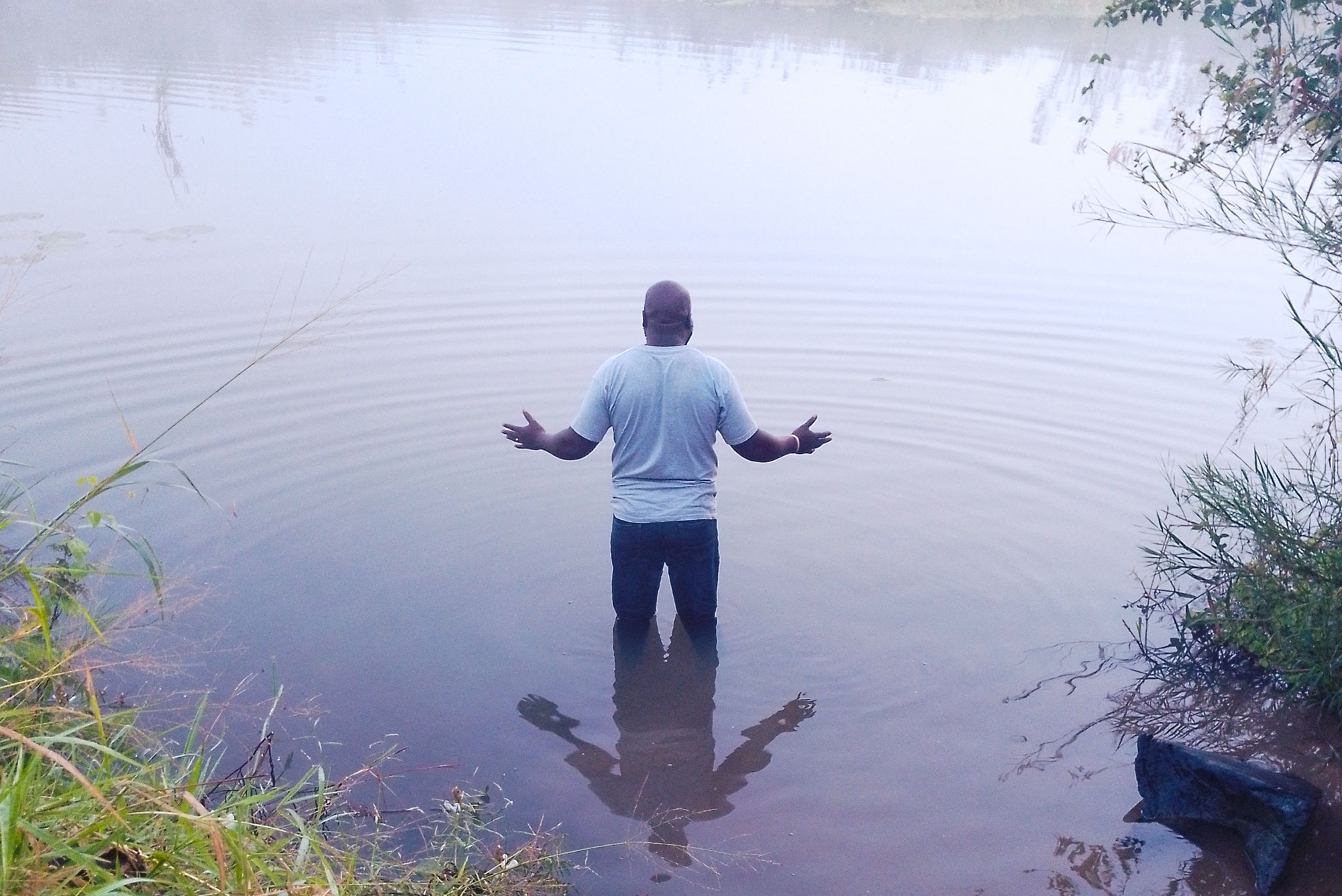
There are moments in life when faith stops being a concept and becomes a matter of survival—when everything you once considered safe begins to crumble, and all you can do is whisper, “Lord… where are You?”
Through my own journey, and through years of walking with people across the MENACA region, I have learned that faith rarely grows in comfort. It grows in conflict, in the places we never planned to be.
Some time ago, I passed through one of those seasons. A storm struck my life hard, threatening my emotional and family stability. I felt hurt, misunderstood, and unsure how to keep going. There were nights when I could not pray—only cry. Yet in that silence, something sacred began to form.
In the middle of the pain, worship rose. It wasn’t joyful or polished—it trembled. Worship born through tears and broken words. But it was real. And in that raw worship, I met Christ not as an idea I believed in, but as the One who carries.
I discovered that Jesus does not only call us to carry our cross—He carries us through it. I experienced His presence not in a loud or dramatic way, but like a whisper. Like the whisper Elijah heard on the mountain, He was there—quiet, strong, and steady.
The Bible does not hide suffering. It tells the stories of people who walked through deep pain and still held on to hope—a hope that did not erase sorrow or ignore the weight of their trials, but transformed them.
Peter urges us to “rejoice” (1 Peter 1:6). James echoes the same command (James 1:2). First, because our trials are temporary when set against the future that awaits us. Second, because behind every trial there is a redemptive purpose: “your faith, much more precious than gold,” is being refined. And third, because the result of this refining is “praise, glory, and honor” when Jesus Christ is revealed.
Job lost everything, yet declared, “Though He slay me, yet will I hope in Him.” This was not blind faith—it was surrender. It was the choice to keep trusting when nothing made sense.
David, hiding from Saul, poured out his anguish in the Psalms: “Why, my soul, are you downcast? Put your hope in God.” Those words were not written from a place of comfort, but from the darkness of a cave. Faith is not pretending to be strong—it is choosing to look up when everything in you wants to give up.
And then there is Jesus, the perfect image of hope in suffering. “For the joy set before Him, He endured the cross.” Hope carried Him through the agony, and that same hope carries us.
Redemption unfolds when we allow ourselves to be carried by Christ even when everything around us gives us reasons to let go. Hope lives in that defiant decision that says, “I will not give up, because the One who redeemed me has not let go of me.”
Nothing delights the heart of God more than steadfast faith—faith in who He is and in everything He has promised.
Looking back on my own valley, I have realized something: I was not holding myself together—Christ was carrying me. His Word became my refuge. His love became my strength. Many days, all I could do was sit at the piano and weep, and with a broken voice, lift a song of worship—full of tears, but also full of truth and surrender.
That is what hope is: not the absence of pain, but the awareness of His presence within it (Romans 5:3–5).
God does not always change our circumstances, but He always changes us in the middle of them.
That is where hope grows—in surrender, in worship, in endurance. It becomes more than survival; it becomes a testimony.
Christ never carries us just to return us to where we were. He carries us so that we can grow—and so that we can carry His love to others who are hurting.
When you have tasted pain and found His comfort, you begin to see others differently. Their pain is no longer foreign—it becomes familiar. And instead of offering solutions, you offer presence: the same presence that once held you together.
Paul wrote, “We are hard pressed on every side, but not crushed; perplexed, but not in despair.” That is not theory—that is experience. Grace does not always stop the storm, but it keeps us from breaking beyond repair.
Hope is not escaping the storm; it is standing in it, knowing that the One who calmed the sea is still calming hearts.
Not a single tear is wasted. One day, we will understand how the nights we feared would destroy us were actually shaping our faith instead.
Paul called it “an eternal weight of glory beyond all comparison, as we look not to the things that are seen but to the things that are unseen” (2 Corinthians 4:17–18).
Until that day comes, we keep worshiping and breathing through tears and trusting the hands of the One who carries us. Because hope is not something we cling to—it is Someone who clings to us. And His name is Jesus.
Aysha Hatem
